You can't go 💩.
So let's talk about it.
1 in 3 women in perimenopause and menopause is constipated. It's the least discussed symptom of the transition.
↓ Three minutes, worth it
Let's say it plainly: you're constipated.
Not "a sensitive stomach." Not "a bit of bloating." If your week looks like this, you're not broken, you're constipated. And millions of women your age are right there with you:
Two, three, four days of nothing. Somewhere along the way, you stopped expecting your body to show up for you.
Straining, hard stools, and the feeling of never being quite done. Going shouldn't be work.
A belly that swells as the day goes on, clothes that stop fitting by 4pm, a heavy, sluggish feeling.
It's not your diet. It's your hormones.
You didn't suddenly forget how to eat vegetables at 45. Your gut just lost its pacemaker. Here's what's actually going on, in three steps:
Hormones drop
Oestrogen and progesterone don't just run your cycle — they help pace your gut. Perimenopause pulls them down, and the pacing goes with them.
The gut slows
The muscles that move food through you lose their rhythm. Transit stretches from hours to days.
Everything hardens
The longer things sit, the more water the colon pulls out. Drier, slower, harder to pass.
You didn't change. Your pacemaker did.
Then you reach for the fix that makes it worse.
The pharmacy aisle has one answer for a slow tummy: force it. That might get you through one bad week but it's no way to live the next thirty years.
Stimulant laxatives
Senna and friends force the muscle to contract. Cramping, urgency, 3am surprises — and used often, your bowel can learn to wait for them. They were built for rescue, not routine.
Gritty fibre drinks
Psyllium works — if you can stand gulping down sand before it sets, and the bloating that often comes with it. Most women quit within weeks. A fix you abandon isn't a fix.
"Just drink more water"
The advice every woman has already tried. Hydration matters, but it doesn't restart a gut whose pacing hormones changed. You deserve real help, not another platitude.
The answer was sitting in the fruit bowl.
Tummy doctors recommend two green kiwifruit a day. In head-to-head trials, kiwifruit matched or beat dietary fibre with less bloating.
It works without forcing. Kiwi fibre holds many times its weight in water; actinidin, its unique enzyme, supports digestion. It just helps your own rhythm come back.
Meet Actazin® — kiwi with superpowers. Natural New Zealand green kiwifruit, concentrated into a powder so one small dose carries the goodness of whole fruit.
The three compounds proven to solve this.
Research keeps pointing at the same three compounds — each with a different job, on a different clock. In the order you'd feel them:
Magnesium citrate
DAYS 1–5The early responder. One of the best-absorbed forms of magnesium, working osmotically — drawing water into the gut so things soften and move within days. Gently: no cramping, no urgency, no dependence.
Green kiwifruit
WEEKS 1–4The mechanism. Whole New Zealand green kiwifruit, at the dose used in clinical research, rebuilding a rhythm that holds on its own. Food, not a drug.
Invisible prebiotic fibre
EVERY DAYThe invisible fibre. Dissolves completely clear — no grit, no thickening — and feeds the gut bacteria that keep things moving. One of the gentlest, best-tolerated fibres studied. The anti-Metamucil.
We're building this for a specific woman.
She's in her 40s to 70s — perimenopause, menopause, or past it — and her digestion changed when her hormones did.
She wants something gentle enough for every single day — a rhythm, not a rescue.
She's tried the gritty drinks and the harsh pills, and refuses to build a life around either.
She'd rather understand how it works than be sold a miracle — which is why this page exists.
All of that science, in a daily glass.
morningKiwi is a daily supplement that gets you going again. The three compounds, at the researched doses, in one drink sachet: stir into cold water, drink every morning.
We're finishing the formulation right now — final dosing, taste and third-party testing. The first batch is small, and it arrives in November 2026.
For now, join the VIP list and get the free guide.
The Midlife Gut Guide
The first step of solving a problem is understanding it. Once you read this you'll understand perfectly what's happening to you and what's causing it.
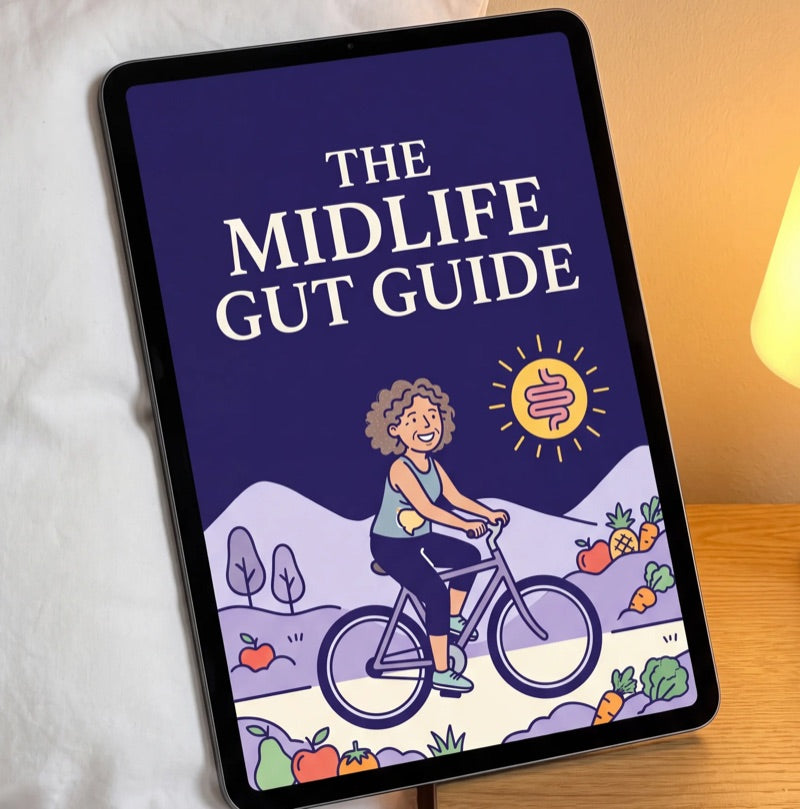
Get the free guide. Don't miss the launch.
Drop your email and get The Midlife Gut Guide, and your place at the front of the line when the first batch ships.